
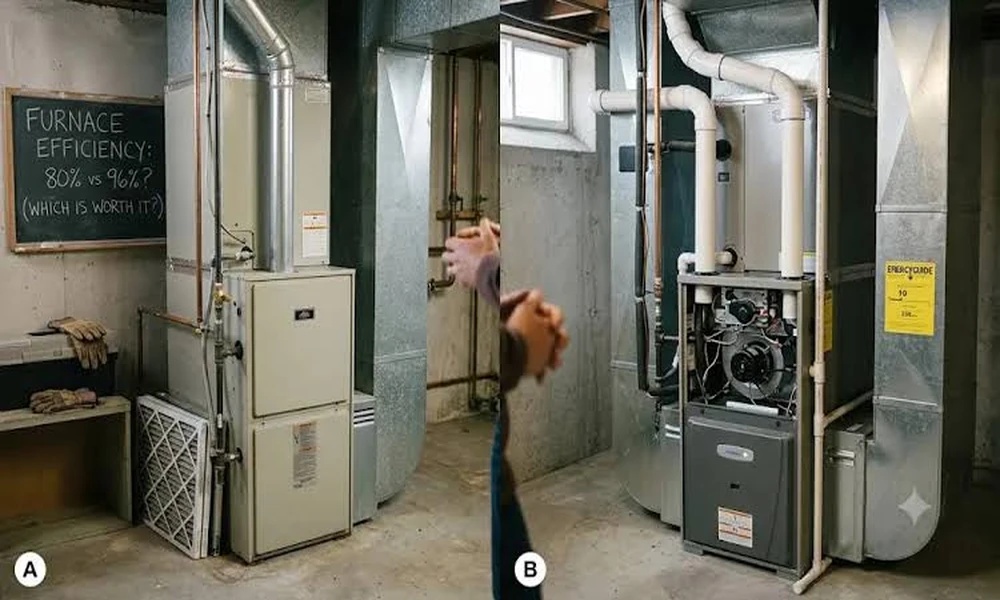
Furnace shopping can feel like decoding a foreign language. AFUE, BTU, stages, modulating: every brochure is packed with terms that sound important but rarely come with a plain explanation. If you are weighing a new gas furnace in Clackamas, knowing how to read the spec sheet will help you compare models fairly and avoid paying for features you will never use. This guide walks through the numbers that matter, in the order they matter.
Start with the Efficiency Rating
The first number on most spec sheets is AFUE, short for Annual Fuel Utilization Efficiency. In general, it is the percentage of the heat in the incoming fuel that gets converted into space heat instead of being lost. A furnace rated at 96 percent turns about 96 cents of every fuel dollar into heat for your home, and the rest goes out the vent.
A higher AFUE usually means a higher purchase price but lower monthly gas bills. The right balance depends on how much you use your heat and how long you plan to stay in your home.
Check the Heating Capacity
Capacity is listed in BTUs per hour. Many people assume bigger is better, but that is a common mistake. An oversized furnace heats the house quickly, shuts off, and starts again over and over. This short cycling wears out parts faster, creates uneven temperatures, and wastes fuel.
A properly sized furnace is chosen using a load calculation that considers:
- Your home’s square footage and layout
- Insulation levels and window quality
- Air leakage and ductwork condition
- Local winter temperatures
Ask your installer to show the calculation instead of guessing from the size of your old unit. Homes change over time, and your old furnace may already have been the wrong size.
Understand the Stages
The stage rating tells you how the furnace adjusts its output:
- Single-stage runs at full power every time. It is the simplest and most affordable option.
- Two-stage has a low setting for mild days and a high setting for cold snaps. It runs longer at lower output, which feels more even.
- Modulating adjusts its output in small steps to match what your home needs. It gives the steadiest comfort and often the best efficiency.
If your house has hot and cold spots, or if you value quiet and steady temperatures, a multi-stage model is worth a look.
Look for the ENERGY STAR Label
Certification is a quick way to confirm a furnace meets an independent standard. According to the ENERGY STAR program, certified gas furnaces must reach 95 percent AFUE or higher in the South and 97 percent or higher in the North, and Oregon is listed among the North states. That means a certified model sold here should sit at the high end of the efficiency range. The same page also notes that certified gas and oil furnaces must have no more than 2 percent air leakage. Tight construction like that keeps conditioned air in your ducts instead of leaking out of the cabinet.
Don’t Skip the Fine Print
Some details rarely make the headline but affect daily comfort and long-term cost:
- Blower motor type. Variable-speed motors run quieter, move air more evenly, and use less electricity than basic motors.
- Heat exchanger material and warranty. This is the most important internal part, so compare how long each manufacturer covers it.
- Venting requirements. High-efficiency models vent through plastic pipe, often out a side wall. Check that your home can accommodate it.
- Noise rating. Look for decibel levels if the furnace will sit near bedrooms or living areas.
- Smart thermostat compatibility. Some systems pair with advanced controls for tighter scheduling and monitoring.
Match the Furnace to Your Ductwork
Even the best furnace underperforms when connected to leaky or poorly designed ducts. Before you buy, ask for a duct inspection. Sealing joints, adding return airflow, or repairing damaged sections can improve comfort as much as the furnace itself.
Questions to Ask Before You Sign
Bring this short list to every estimate:
- How did you calculate the size of the furnace?
- What is the AFUE, and how many stages does it have?
- Is the model ENERGY STAR certified?
- What does the warranty cover, and for how long?
- Does the quote include permits, venting changes, and removal of the old unit?
- How often should I schedule maintenance?
Clear answers to these questions are a good sign you are working with a professional who values your comfort over a quick sale.
Protect Your Investment with Yearly Tune-Ups
A furnace is only as reliable as its upkeep. Annual maintenance, regular filter changes, and keeping vents clear help your system run safely and last longer. Test your carbon monoxide detectors every fall, and call a technician quickly if you notice strange noises, yellow flames, or uneven heating.
Final Thoughts
A spec sheet looks complicated, but a few numbers do most of the work: AFUE for efficiency, BTUs for sizing, stages for comfort, and certification for confidence. Compare those four first, then look at the extras. With the right information in hand, choosing a new furnace becomes a straightforward decision instead of a stressful one.