
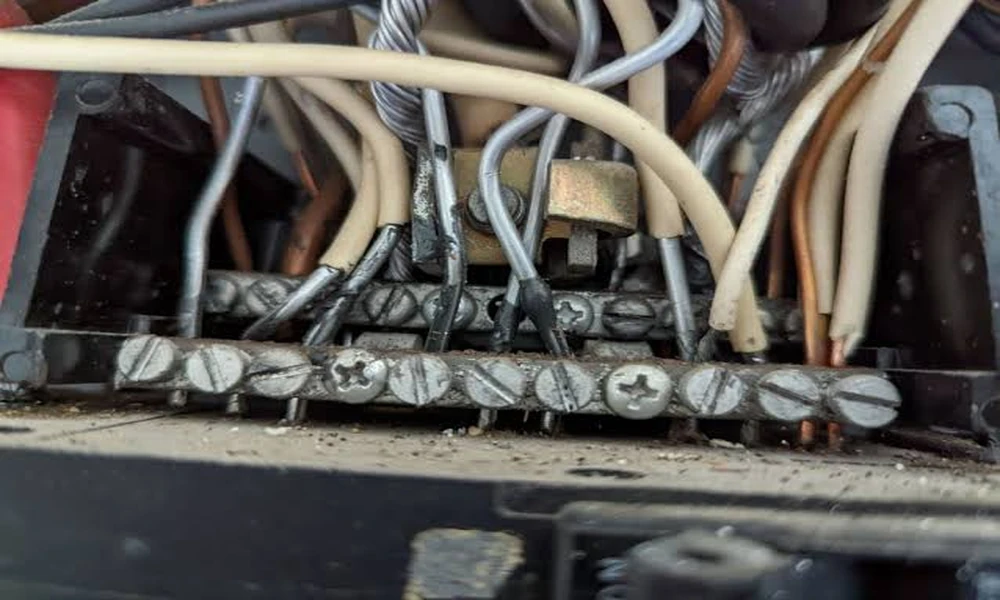
A light switch that feels faintly warm under your thumb is easy to ignore. In a house framed between the mid-1960s and the early 1970s, though, that warmth can come from somewhere else entirely, a single solid aluminum conductor slowly loosening under a brass screw it was never well matched with.
Neighborhoods around Hackettstown, Long Valley, Randolph and the lake communities filled with houses built in exactly that window. Electricians at NJC Electric, a Hackettstown shop that handles aluminum wire remediation alongside knob and tube removal, regularly meet owners who only learned what was inside their walls when an inspector or an insurance form asked first.
When Copper Got Expensive, Builders Reached for Something Else
During the housing boom of the mid-sixties, copper prices climbed sharply and builders went looking for a cheaper conductor. Aluminum was lighter, plentiful and carried current well enough once it was sized up a gauge. For roughly eight years, solid aluminum ran through ordinary 15 and 20 amp branch circuits feeding outlets, switches and ceiling lights in countless ranches, split-levels and colonials.
The alloy used in that era, often called “old technology” aluminum, turned out to behave badly at connections. Manufacturers reformulated it in the early seventies, and electricians largely returned to copper for small circuits soon after. Homes built before 1965 are unlikely to have aluminum branch wiring, which neatly brackets the risk window. A 1958 house that gained an addition during those years might have some too.
The Trouble Lives at the Screw Terminal
The wire itself rarely fails in the middle of a wall. Problems gather where it ends, at the receptacle, switch, splice or fixture.
Aluminum expands and contracts more than copper every time current flows and stops. Over thousands of cycles it also creeps, slowly deforming under the pressure of a tightened screw and easing away from it. A connection that was snug on move-in day gradually goes slack. Add the thin oxide layer aluminum forms on any exposed surface, which resists current far more than the metal beneath it, and the joint starts making heat instead of simply passing electricity along. Heat speeds up oxidation and expansion, and the cycle feeds itself.
Devices of the period made things worse. Many outlets and switches were rated only for copper, and push-in “backstab” connections gave aluminum even less contact area to hold. Federal research found that pre-1972 homes wired with this aluminum were about 55 times more likely than copper-wired homes to have at least one connection reach fire hazard conditions.
Finding It Without Opening a Wall
A flashlight and fifteen minutes usually settle the question in these spots.
- Unfinished basement ceilings, where cables run along the joists. Look for “AL” or “ALUMINUM” printed on the outer jacket every few feet.
- The attic, especially near ceiling fixtures and bath fans.
- The cables entering the top of the main panel, where jacket printing is usually legible. Leave the panel cover in place.
- Inside a switch or outlet box, only after the breaker is off, where the bare conductor will look dull silver rather than copper colored.
One distinction saves a lot of needless worry. Large stranded aluminum conductors feeding a range, dryer, central air unit or the service entrance itself are common, still installed today, and generally fine when terminated on lugs rated for them. The concern centers on the small solid conductors serving everyday outlets and lights.
Clues the House Gives Before a Failure
Failing aluminum connections tend to announce themselves in small, inconsistent ways. A cover plate that feels warm with nothing heavy plugged in is the classic sign. Lights may flicker when an appliance on another outlet kicks on, or an outlet may work in the morning, go dead by evening and return after a breaker reset. Some owners notice a faint smell of hot plastic in one room with no obvious source. Brown or tan discoloration on a receptacle face, or a plate that looks slightly softened at the edge, means the connection has already overheated more than once.
None of these signs is unique to aluminum, but in a house from this era they should push it to the top of the suspect list.
Three Repairs That Last and Two That Fall Short
The Consumer Product Safety Commission recognizes only a handful of permanent fixes, laid out in its guide to repairing aluminum wiring. Each takes a different path to the same goal, which is getting aluminum out of the connection points where the danger concentrates.
- Complete rewiring with copper. This is the most thorough option and the most invasive, since it means opening walls and ceilings in finished rooms.
- COPALUM crimp pigtailing. A short copper lead is joined to each aluminum end with a sleeve crimped under very high pressure by a specialized tool, essentially cold welding the two metals. Only trained, authorized installers have access to that tool, which is why availability varies by region.
- AlumiConn connectors. A small lug with separate set screw ports holds the aluminum and copper apart, each screw torqued to a specific value. It is more widely available, but its reliability depends heavily on correct installation.
Two popular shortcuts fall short. Purple twist-on wire connectors marketed for aluminum have not met the agency’s standard for a permanent repair. Swapping in outlets and switches labeled CO/ALR helps at those particular devices but leaves splices, light fixtures and junction boxes untouched, so it counts as a partial measure at best.
Pigtailing a whole house means visiting every outlet, switch, fixture and junction box, which can add up to well over a hundred connection points in a modest home. It is still far less disruptive than tearing out plaster.
Paperwork Has a Way of Finding It
Aluminum branch wiring tends to surface at moments that involve forms and signatures. Some insurers ask about it on applications or hesitate to cover unremediated homes, while others are satisfied once an electrician documents the repair. Home inspectors in New Jersey routinely note it, and buyers frequently use it as a negotiating point. Keeping the invoice and a record of the treated connections makes those conversations far shorter.
Living With It in the Meantime
Plenty of families live in aluminum-wired homes for years before remediation, and most never see a fire. The goal in the meantime is to stop adding stress to joints that may already be marginal. Avoid running space heaters, window air conditioners or other heavy loads on circuits you suspect. Never replace an outlet or switch yourself with a standard copper-only device, which can turn a tired connection into a hot one overnight. Treat a tripped breaker as information rather than a nuisance.
A working smoke alarm on every level and outside each sleeping area matters more in these houses than almost anywhere else. With the wiring identified and the warning signs understood, the repair becomes a planned project instead of an emergency, which is exactly how a fifty-year-old electrical system deserves to be handled.