
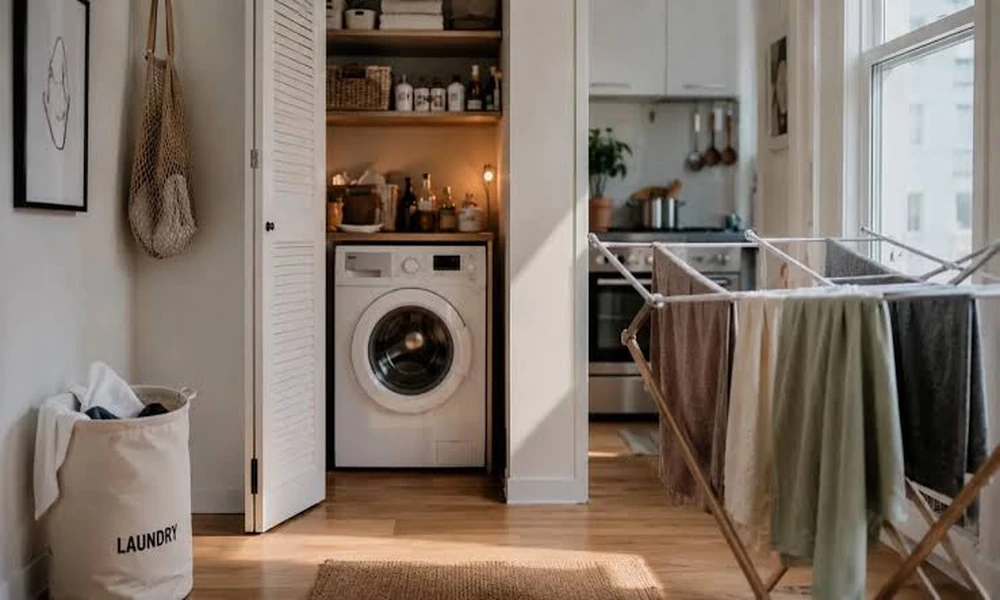
A compact apartment needs a drying-equipment plan that accounts for how people enter, move and use the remaining space. Small floor area does not automatically mean simple delivery or an easy setup. When a professional has assessed the work and identified equipment needs, residents can help by describing the building’s access conditions and the apartment’s everyday use before the rental arrives.
Start at the building entrance
The equipment’s journey begins outside the apartment. Confirm the building’s actual requirements for deliveries, elevator use and access with the responsible management contact. Do not assume a regular parcel-delivery arrangement covers rental equipment. A reserved elevator, a loading area or a scheduled recipient may be relevant, but the requirements must come from the particular building rather than a general assumption about apartment living.
Pass the confirmed information to the rental provider before agreeing on the handoff. Include practical constraints such as steps or a narrow turn where relevant, and ask what equipment dimensions or handling information the provider needs to review access. The resident should describe the route accurately. The supplier or competent handler should determine how the equipment can be moved appropriately, without improvisation at an awkward landing.
Avoid sharing building codes widely while coordinating the delivery. Use the building’s approved access process and provide necessary information only to the people involved. An authorized person should be available to receive the equipment and connect the supplier with the intended operator. This is especially useful where a resident, owner and contractor all have different schedules and each assumes someone else will be present.
Show the operator how the apartment is used
A floor plan becomes more useful when it shows the household’s essential activities. Identify normal routes to the bathroom and entrance, places needed for sleeping or work, and any mobility constraints the operator should consider. The responsible professional can then assess the equipment arrangement against the actual space. Residents should not devise cord routes, outlet arrangements or machine placement from a sketch on their own.
Be candid about conflicts. A machine location that appears convenient in an empty room may interfere with a resident’s required route or an essential piece of furniture. Raising that issue early is more useful than moving the equipment later without advice. If the plan cannot accommodate normal use, ask the responsible professional what the occupants should do. Equipment on site is not an assurance that every part of the apartment remains suitable for occupation.
Include the contents that will stay. A large table, shelving unit or bed may limit the available working area, and moving it may require separate assistance. Let the project lead determine what preparation is appropriate, especially where contents may be water affected. The resident should not undertake unsafe lifting or handle suspect materials to make a diagram look tidier. A truthful description of constraints supports a more realistic plan.
Make the equipment handoff fit the available space
Once the application and access are settled, confirm the exact equipment being supplied. Drying Equipment’s portable air-mover offering is a Toronto rental category that can be reviewed with the person directing the work. The category name alone does not determine the number of units, placement or suitability for a specific apartment. Those decisions belong to the assessed plan and the actual equipment instructions.
Ask how operating guidance will reach the person responsible on site. If the supplier explains the machine to an owner who then leaves, the resident or contractor remaining with it still needs a proper handover. Keep the relevant instructions and contact information accessible. Avoid storing them in an account that only one absent person can open, particularly when the equipment will remain through a change of shift or household contact.
Discuss where associated items and paperwork will be kept without obstructing access. Small homes often lack a spare utility area, so even a modest collection of accessories can create clutter. The supplier and operator can explain which items belong with the equipment and how they should be retained. Do not detach, relocate or store parts simply to clear a shelf unless that action is consistent with their instructions.
The handoff should also establish what to do when a resident notices a problem. A strange condition, interrupted operation or changed room use should be reported through the agreed route. The household should not feel it must diagnose or repair a rental machine to avoid inconveniencing the provider. A clear contact is a practical part of the service, especially in a space where uncertainty quickly affects daily life.
Revisit the plan if the household cannot function
The apartment may feel different once equipment is operating and ordinary routines resume. If an access or comfort conflict emerges, bring it to the project lead promptly. Do not independently change the agreed operating schedule or relocate equipment as an informal compromise. The professional plan should be reviewed against the actual problem so any adjustment preserves the intended work and addresses the household’s circumstances.
Keep subsequent instructions consistent among occupants. A brief written update can say what has changed and whom to contact; it need not reproduce technical guidance from memory. The person issuing the revised instruction should remain identifiable. This helps prevent one resident following yesterday’s arrangement while another assumes a new verbal suggestion has replaced it.
A successful compact-space rental is one that fits the assessed job and acknowledges the home people actually occupy. Accurate access details and honest daily-use constraints are therefore part of equipment selection, not decorative information added after booking. Give the responsible team that information early, and let the usable space influence the plan before the doorway fills with machines.