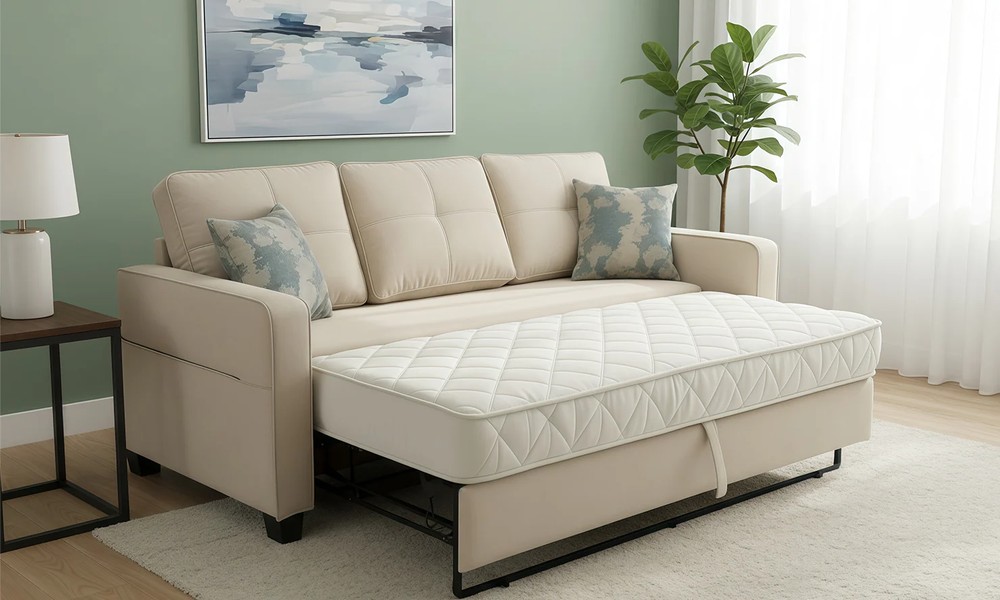
A sofa bed always sounds like a smart idea at the start. It saves space, gives you an extra sleeping spot, and works perfectly in a compact living room.
But here’s the thing, not all sofa beds are built the same. Some feel great in a showroom but start sagging, creaking, or becoming uncomfortable after a few months of real use. Others quietly hold up for years without much fuss.
So how do you tell the difference before you commit?
If you’re planning to buy a sofa bed, it’s worth knowing what to look for. Let’s break it down in a way that actually makes sense when you’re standing in a showroom or scrolling online listings.
Start With the Frame – It’s the Backbone
Everything begins with the frame.
A sturdy frame usually means the sofa bed will last longer and feel more stable over time. Solid wood or metal frames tend to hold up better than lightweight particleboard or flimsy constructions.
You don’t need to overthink it-just give it a quick check. Sit down, shift your weight, maybe even press lightly on different parts. If it feels wobbly or makes noise right away, that’s usually a red flag.
A well-built frame should feel solid and steady, even before you start thinking about comfort.
Test the Opening Mechanism (Don’t Skip This)
This is where many people go wrong-they like how the sofa looks but don’t actually test how it opens.
If you plan to use the bed regularly, the mechanism matters a lot. It should:
- Open smoothly without needing too much force
- Feel balanced (not jerky or uneven)
- Lock securely into place
Try opening and closing it yourself if possible. If it already feels awkward in the showroom, it’s not going to get better at home, especially after repeated use.
In smaller living rooms where you might convert the sofa daily, ease of use becomes a big deal.
Look Closely at the Mattress
This is the part that directly affects sleep quality-and it’s often overlooked.
A thin, springy mattress might be fine for the occasional guest, but for long-term use, you’ll want something more supportive. Memory foam or high-density foam options tend to offer better comfort over time.
Pay attention to:
- Thickness (too thin usually means less support)
- Firmness (it should support your back properly)
- Evenness (no obvious lumps or hard bars underneath)
If you can feel the frame through the mattress when lying down, that’s a clear sign it’s not meant for regular use.
Check the Cushion Quality (For Daily Sitting)
Remember, a sofa bed is still a sofa first.
If you’ll be using it every day, the seat cushions need to hold their shape and comfort over time. Low-density foam might feel soft initially but can flatten quickly, leaving the sofa looking tired and feeling uncomfortable.
A good sofa bed should feel supportive when sitting-not too soft, not too stiff. It should bounce back slightly when you stand up, rather than staying compressed.
Think of it this way: if it’s not comfortable to sit on daily, it’s already not a long-term solution.
Pay Attention to Upholstery
Fabric might seem like a purely aesthetic choice, but it actually affects durability more than you’d think.
In Singapore’s warm and humid climate, breathable and durable fabrics tend to perform better. Look for materials that:
- Resist wear and tear
- Are easy to clean
- Don’t trap too much heat
If you have kids, pets, or frequent guests, this becomes even more important. A sofa bed built for long-term use should be able to handle real life-not just look good for a few months.
Weight Capacity and Build Quality
This is something people rarely ask about-but it matters.
A sofa bed built for long-term use should comfortably support regular weight without straining the frame or mechanism. If it feels like you need to “be careful” every time you use it, that’s not a great sign.
Heavier, well-built sofa beds often indicate better materials and stronger construction. It might not be the easiest to move around, but it usually pays off in durability.
Think About How Often You’ll Use It
Here’s a simple way to guide your decision:
- Occasional use (guests only): You can get away with simpler designs and thinner mattresses
- Frequent use (weekly): Look for stronger frames and better cushioning
- Daily use: Treat it like a real bed and a real sofa-no compromises
Being honest about your usage helps you avoid overspending on features you don’t need or worse, underspending and regretting it later.
Notice the Small Details
Sometimes, it’s the little things that reveal the most.
- Are the hinges quiet and smooth?
- Do parts align properly when opened?
- Does it feel stable when you sit on the edge?
These details might seem minor, but they often indicate overall build quality. A well-made sofa bed feels thoughtful, not rushed or flimsy.
Final Thoughts
A sofa bed can be one of the most practical pieces of furniture you’ll own-especially in a Singapore home where space needs to work harder. But the key is choosing one that’s actually built for long-term use, not just occasional convenience.
When you focus on the frame, mechanism, mattress, and overall build quality, it becomes much easier to spot the difference between something that will last and something that won’t.
At the end of the day, a good sofa bed shouldn’t feel like a compromise. It should feel like a proper sofa during the day and a comfortable bed at night-without you having to think twice about using it.
And once you find one that does both well, you’ll realise it’s not just space-saving furniture-it’s a genuinely smart investment for everyday living.