
On a hot summer afternoon, the roof is the part of the house that takes the full force of the sun. Whatever heat it absorbs does not stay on the shingles. It moves into the attic, then down through the ceiling, and the air conditioner has to deal with the result. The choice of roof material and color seems like a style decision, but it also changes how hard the cooling system works.
Roofers such as Roof Now, which lists asphalt shingle, metal and flat roofs among the types it works on in the Jacksonville area, can talk through those choices when you plan a repair or replacement. To see why it matters, it helps to look at a real test done in Florida.
A Real Test on Real Houses
The Florida Solar Energy Center at the University of Central Florida reported the experiment in a study comparing roofing systems and residential cooling demand, published in November 2000. Researchers instrumented seven houses with the same floor plan and the same ceiling insulation, each with a different roof design. Six of the homes were built side by side in Fort Myers, Florida, and the page does not give the location of the seventh. Six roofs were meant to reduce attic heat gain, and the seventh had a sealed, unvented attic. The control was a standard dark shingle roof.
What the Attic Revealed
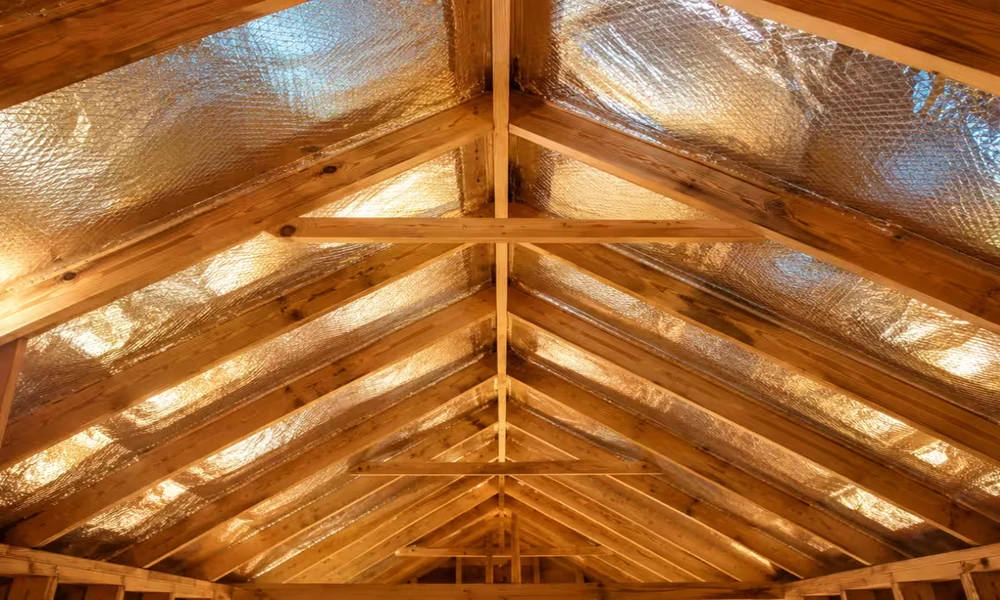
The most striking result was in the attic. At the peak summer hour, the control home’s attic ran about 40 degrees Fahrenheit hotter than the outside air. The study says the highly reflective roofs kept the attic no hotter than ambient. That is a very large difference, and it explains much of what happened in the cooling bills.
Which Roofs Came Out Ahead
In the measured July period, cooling energy savings compared with the dark shingle control were about 29.4 percent for a white metal roof, 22.5 percent for a white flat tile roof and 21.8 percent for a white S-tile roof. The sealed attic saved 13.5 percent, white shingles saved 10.2 percent and terra cotta tile saved 5.9 percent. Peak demand reductions followed a similar pattern, with the white metal roof at 39.7 percent.
The authors conclude that selecting colors with higher solar reflectance will result in tangible cooling energy savings for customers.
Why Color and Material Both Matter
The results show that color was not the only factor. White shingles did much better than a dark roof but trailed white metal and white tile. The study measured how different roof designs performed and does not explain every reason for the gaps, so it is best read as a comparison of complete roof systems and not a ranking of colors alone.
The Fine Print
The study has limits that the authors are open about. The houses were small, at about 1,144 square feet, and the measured savings were for one unoccupied month in July. The authors note that savings scale with ceiling area, and their normalized estimates, which adjust the results to typical homes, came out lower for the white metal roof, at 23 percent for cooling energy and 28 percent for peak demand. The data are also from the year 2000, and the page says the views are the authors’ and not necessarily those of the research center.
What It Means for a Jacksonville Home
The study was done mostly in Fort Myers, not Jacksonville, so the numbers should not be treated as a prediction for any one house. As general knowledge and not from the study, Jacksonville summers are also hot and humid, which makes the direction of the findings relevant. A roofer can help you weigh reflectivity against other factors such as cost, wind rating, appearance and any local or homeowners association rules.
About the Company Behind the Link
Roof Now says on its website that it is a local roofer serving Jacksonville and its surrounding areas, and lists Clay, Duval, Nassau and St. Johns counties. Its listed services include new roof installations, roof replacements and re-roofs, roofing maintenance and repairs, roof inspection, storm damage repair and commercial roofing, with work on shingle, metal and flat roofs. The site lists a Roofing Contractor license, CCC1334147, and a General Contractor license, CGC1512192, and a phone number of (904) 226-4556. It does not state years in business and gives no warranty details. The site does not say whether it installs reflective or white roofing, so ask directly. Confirm the licenses on MyFloridaLicense.com yourself.